As part of the Cinema Classroom cycle of the Centre for Women’s Studies at the Faculty of Humanities and Social Sciences in Rijeka—which throughout 2026 examines remilitarisation trends in Croatia, Europe, and the world through a film programme, lectures, and discussions—the second of this year’s seven programme events will take place on Wednesday, 6 April at 18:30 at Klub Palach in Rijeka.
The theme of the event is “The Gendered Body as a Battlefield”. In fact, warfare is waged not only on the ground, but also through bodies—through motherhood, masculinity, and the politics of protection. Nationalist and militaristic discourses are reproduced through emotions such as fear, pride, and shame, turning reproduction into a patriotic duty and vulnerability into an excuse for violence. This theme examines how gender and sexuality structure both the rhetoric and the effects of war.
The topic will be discussed by Marija Katalinić, a member of the Centre for Women’s Studies at the Faculty of Humanities and Social Sciences, who will analyse the documentary film Motherland (2023), directed by Alexander Mihalkovich and Hanna Badziaka (Sweden, Ukraine, Norway, 2023, 92′).
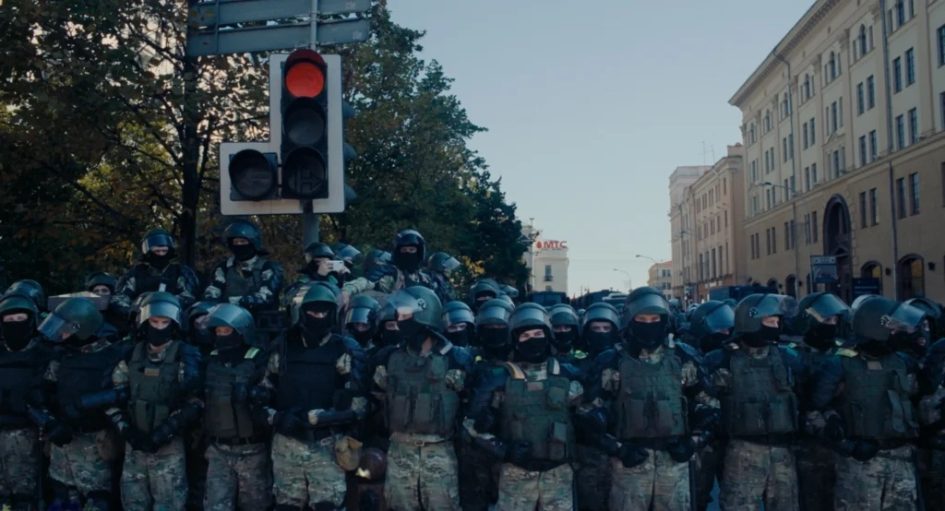
This is a powerful and poignant film providing insight into the brutal practice of dedovshchina—a system of violence against military recruits in Belarus. Through the stories of Nikita, a young soldier, and Svetlana, a mother seeking the truth about her son’s death, the film exposes a long-standing mechanism of abuse, torture, and murder used as a means of control, pointing to the deep, generational traumas that such a system produces. Visually suggestive and emotionally powerful, Motherland speaks of violence, courage, and the struggle for dignity and peace.
Marija Katalinić is a researcher and curator whose work involves the interdisciplinary study of gender, memory, and film within the broader field of visual culture. She obtained her PhD in 2023 from the Humboldt University of Berlin, at the Institute for Cultural Studies. She is active in the field of documentary film through curatorial, programming, and moderating work, as well as collaborations with partners such as Art-kino Croatia and the Balkan Film Week in Leipzig. She also has experience in managing European cultural projects and was the co-director of the International Association for Visual Culture (IAVC). In her work, she focuses on understanding how culture is distributed and experienced, aiming to promote democratic values through both theory and practice.
Admission to the event is free. The programme is supported by the City of Rijeka and the Embassy of the Kingdom of Norway.