
Text republished from the portal srednja.hr
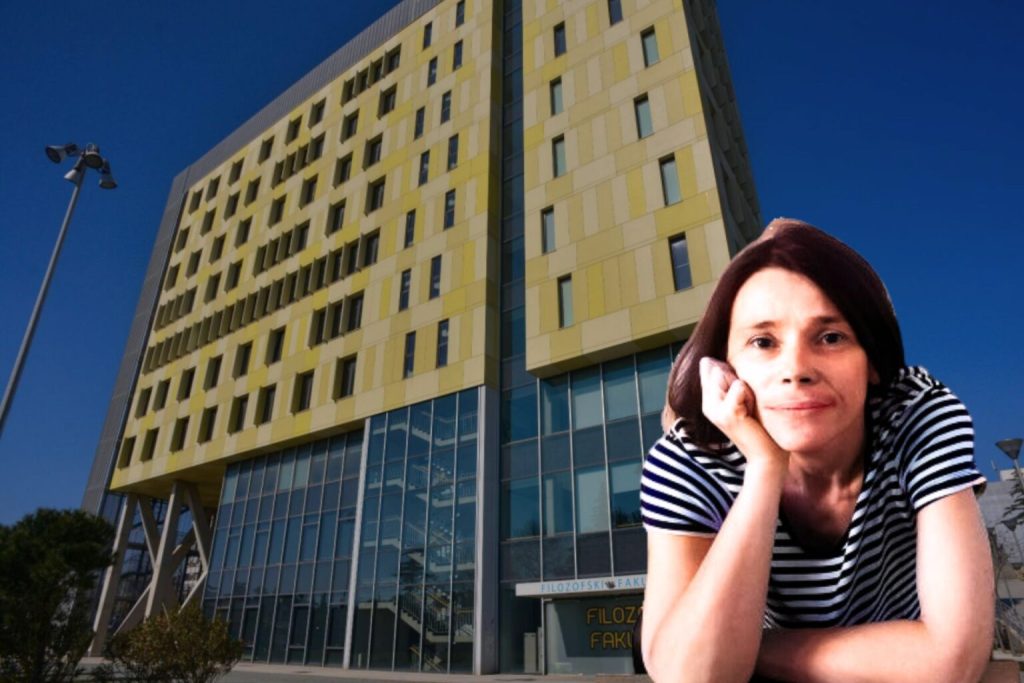
While a storm of debate rages over the launch of Gender Studies in Zagreb, something similar engineering already exists in Rijeka. For years, the local Faculty of Humanities and Social Sciences has housed the Centre for Women’s Studies, which focuses on the themes of gender studies and feminism. Students in Rijeka can also enrol in the course ‘Gender, Sexuality, Identities – From Oppression to Equality’. As of this academic year, they are offered the micro-credential ‘Gender in Contemporary Contexts and Controversies’, upon the completion of which they receive a diploma supplement, and all citizens with a completed secondary education could soon learn about the same topic through a lifelong learning programme.
A Centre for Women’s Studies dedicated to the theme of gender studies and feminism. A course for students entitled “Gender, Sexuality, Identities – From Oppression to Equality”, and a student micro-credential, “Gender in Contemporary Contexts and Controversies”, which is soon expected to become a lifelong learning programme under the same name for all interested citizens with a completed secondary education. All of this already exists in Croatia—in Rijeka, at their Faculty of Humanities and Social Sciences.
“Until now, the Centre for Women’s Studies at the Faculty of Humanities and Social Sciences in Rijeka was the only higher education organizational unit dedicated exclusively to the themes of gender and feminism. Therefore, we take this opportunity to extend our warmest congratulations to our colleagues at the Faculty of Humanities and Social Sciences in Zagreb, especially to our colleague Ankica Čakardić, on their graduate programme, and to wish them successful and fruitful work,” begins Brigita Miloš, Assistant Professor at the Department of Cultural Studies of the Faculty of Humanities and Social Sciences, University of Rijeka, and coordinator of the Centre for Women’s Studies, in an interview with srednja.hr.
Such a Centre at the Faculty of Humanities and Social Sciences in Rijeka was established back in 2016 by a decision of the Faculty Council. Miloš told us that the initiative to found a centre dedicated to gender studies and feminism had existed even earlier, but during its launch, she did not notice any negative comments or problems. She emphasized that they have had the clear support of the Faculty the entire time.
“For nearly two years now, the University of Rijeka has also had a Council for Gender Equality, whose work enriches the institutional policy of promoting the values of inclusion and diversity across all constituents of the Rijeka university. Furthermore, the University of Rijeka was the first university in Croatia to adopt a Gender Equality Plan, and it views the realization of the goals set out in the Plan as an important aspect of improving the University’s quality,” said Miloš.
One of the Centre’s goals highlighted on its website is the introduction of courses at all levels of study. This, Miloš stated, has been achieved through the student course “Gender, Sexuality, Identities – From Oppression to Equality” and the student micro-credential “Gender in Contemporary Contexts and Controversies”. Upon completion of the micro-credential, students are awarded a diploma supplement. The courses within the programme include Philosophy of Sexuality, Human Sexuality, Bioethics and the Women’s Issue, Living with Diabetes – A Gender Perspective, Anti-Discrimination Law, Gender Economics, Gender, Sexuality, Identities – From Oppression to Equality, and Feminism and the Body. All of them cover topics in the field of gender studies.
“The completion of this phase of realizing the goal of launching new courses and programmes will be a lifelong learning programme, also named Gender in Contemporary Contexts and Controversies, which we believe will be launched next academic year. Any interested citizen with a completed secondary education will be able to enrol in this lifelong learning programme. The programme is specific in that it emphasizes the transversality of gender by studying gender aspects across various scientific disciplines such as philosophy, cultural studies, economics, law, and medicine,” Miloš emphasized.
Regarding the course “Gender, Sexuality, Identities – From Oppression to Equality” itself at the Faculty’s Department of Cultural Studies, Miloš explains that the teaching method is somewhat different. In addition to attending classes at the faculty, students engage with civil society organisations in fields relevant to the course topics.
“These organisations are SOS Rijeka, the PaRiter Association, and the LORI Rijeka Association. This year marked the fifth year of the course’s delivery; we managed to overcome the special teaching conditions during the pandemic and are continuing its delivery in the upcoming academic year,” Miloš mentioned.
After Miloš provided a wealth of information on how students in Rijeka can learn about gender, we asked her whether we could claim that the Centre for Women’s Studies and the aforementioned courses are a sort of counterpart to Gender Studies. She explained to us that the series of courses dealing with gender studies and feminist topics in the undergraduate and graduate cultural studies programmes in Rijeka is not, in fact, a counterpart or a precursor to the Zagreb programme.
“In my opinion, the Gender Studies programme at the Faculty of Humanities and Social Sciences in Zagreb is a result of the intrinsic dynamics of studying and teaching gender and/or feminist topics at that institution. The courses taught in Rijeka, at the Department of Cultural Studies, are designed, structured, and delivered in accordance with the programme goals and foundations of the undergraduate and graduate studies in cultural studies. I believe that the reaction from a segment of the public would have been very similar if Gender Studies had been launched in Rijeka, Osijek, Zadar, or at any other Croatian university. Certainly, the largest Croatian university, and the Faculty of Humanities and Social Sciences as part of the University of Zagreb, are institutions of leading national scientific and cultural importance, and are therefore of particular interest. However, it must also be said that the reaction of a segment of the public to the news of launching Gender Studies in Zagreb is somewhat surprising, given that numerous courses relating to gender studies or feminist topics have long been taught at, for example, the Zagreb Faculty of Humanities and Social Sciences, and similarly, courses concerning gender studies topics are taught at other Croatian universities,” Miloš explained.
And while some higher education programmes offer at least some education on gender, the situation in earlier education is much worse. As we previously wrote, only 30 percent of high school students encounter the distinction between sex and gender during Sociology classes. Miloš explains that the term gender is not taught enough in schools, and topics related to gender studies are taught exceptionally rarely or not at all.
“I hope that the relevant and responsible individuals and institutions will soon find an adequate way to change this situation for the better. I believe that individuals who graduate from relevant studies, such as Gender Studies at the Faculty of Humanities and Social Sciences in Zagreb or, for instance, Cultural Studies at the Faculty of Humanities and Social Sciences in Rijeka, could provide excellent staff for teaching various topics within Civic Education, including gender studies. If gender studies are taught only at the university level, then I would venture to say that what gender studies lack—and what necessarily limits their reach and potential—is a lack of educational content on gender topics prior to the university level. Gender studies topics should be taught in an adequate manner at lower educational levels as well, precisely to dispel misconceptions about gender studies content in public and to enable the domestic public to engage in informed debates about them,” Miloš explained.
Some politicians from the right wing of the political spectrum in Croatia certainly did not mince words regarding the launch of Gender Studies in Zagreb. Some worried that their sons would become girls or non-binary individuals, while others attempted to assault university autonomy. Many of them likely never even encountered the concept of gender during their schooling, and that it is—as Sanja Sarnavka from the Solidarna Foundation explained at a parliamentary round table—when society imprints certain expectations. Being born a woman or a man, Sarnavka emphasized, does not mean that someone must be masculine or that a woman, for example, must love cooking.
“The reactions should not come as a surprise because they are aligned with the narratives of right-wing parties that use the phrase ‘gender ideology’ to generate both an obvious fear in public and confusion in understanding the basic terminological apparatus of gender studies. Gender studies topics are not topics that can generate that kind of fear. Only an ignorance of them can do that. On the contrary, gender studies topics promote civilizational values of equality, freedom, respect, inclusion, and diversity, which are at the core of both our homeland’s constitutional acts and our wider socio-political context, that of the European Union. Furthermore, global efforts, particularly those related to gender mainstreaming, point to an even more comprehensive paradigm promoting gender studies themes—the UN and UNESCO,” Miloš asserted.
Gender Studies in Zagreb are expected to begin delivery in the 2025/26 academic year, and until then, they face a review by the Agency for Science and Higher Education. Namely, the Ministry sent a rejection letter to the University regarding Gender Studies because their initial accreditation was carried out under older regulations. Ivan Penava from the Homeland Movement, on the other hand, announced that they will not support the implementation of Gender Studies. Miloš told us that she does not know how he personally could prevent Gender Studies, but that a scenario where politics restricts academic freedoms, autonomy, or the freedom of thought or teaching is possible.
“One should recall, for example, Afghanistan, where by a political decision a couple of years ago, girls and women were denied the right to education—a decision that caused consternation worldwide. In that respect, yes, I believe that politics can do itself a disservice and attempt, or even succeed in, restricting or banning certain topics or aspects of scientific and educational work, but such decisions are always to the detriment of the entire society, and thus to the detriment of that part of society that produced the ban itself,” Miloš concluded.
What can Gender Studies raise public awareness about?
Gender Studies, Miloš believes, can highlight the gender pay gap and unequal career advancement opportunities for men and women in areas of vital public interest, such as technical professions, the IT sector with a particular focus on AI, energy, and innovation. Furthermore, she states that they can contribute to raising awareness of the multiple 'shifts' of women's labour, point toward policy improvements regulating work-life balance, shed light on the reality of period poverty, inform about the status of women's reproductive and sexual rights, gynaecological or obstetric violence, and question the general status of women and other gender minorities in society. They can, Miloš added, inform about the reasons behind the underrepresentation of women in politics and in leadership and socially relevant positions, address topics such as hegemonic or toxic masculinity, as well as the question of what is meant by masculinity in general.
Author: Hrvoje Debeljak